A bulb can be warm in colour and still give plenty of light. It can also look bright in the shop and feel wrong behind your lampshade. Start with the lamp’s requirements, then choose brightness and colour as two separate decisions. Changing the bulb is a small purchase; buying the wrong type repeatedly is an avoidable one.
Choose the light for the job
- Confirm the lamp’s fitting, voltage and permitted specification.
- Read lumens for brightness and kelvin for colour.
- Check dimmer compatibility before buying multiples.
Write down the fitting before shopping
Check the lamp or fitting instructions and the existing bulb’s markings. Record the connection type and size, voltage, permitted bulb type and actual maximum wattage. Include the bulb’s physical shape: a compatible base does not prove that a large globe will fit inside a shade. A photograph of the markings is useful; do not rely on the old packaging belonging to the bulb still in the lamp.
Electrical Safety First’s bulb-replacement advice explains why the rating, voltage and connection matter. Switch off and allow a hot bulb to cool; follow the fitting’s instructions and appropriate isolation advice. If it is an integrated fitting, damaged, inaccessible or unclear, ask a qualified electrician rather than improvising with wiring or adapters.
Read lumens and watts for different reasons
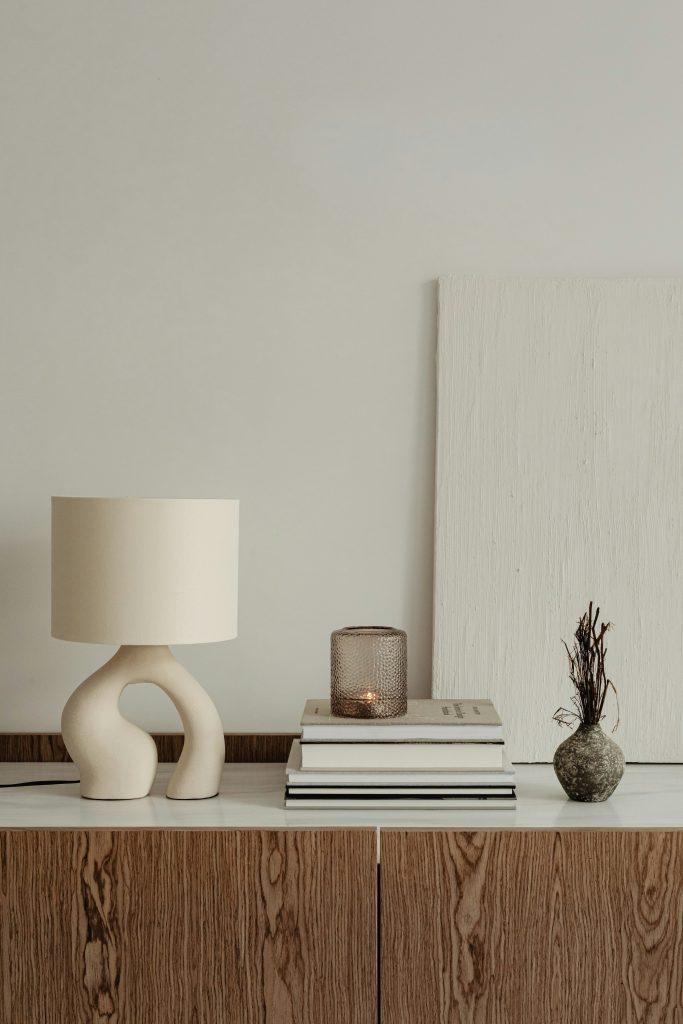
An illustrative specification — not an actual product or compatibility recommendation.
Lumens describe brightness; watts describe power use. Energy Saving Trust’s lighting guide recommends comparing lumens rather than using old incandescent wattage as a brightness measure. A package’s “60W equivalent” is not the actual electrical rating of the LED bulb. Read the actual wattage too and stay within the fitting’s permitted specification.
| Question | Look for | What it cannot tell you |
|---|---|---|
| Will it fit and operate? | Correct base, voltage, type, physical dimensions and permitted wattage. | That its light will suit the room. |
| How much light? | Lumens. Compare with a bulb you already find comfortable. | Whether the shade or position will spread it usefully. |
| What colour? | Colour temperature in kelvin, alongside the retailer’s description. | How bright it is. |
| Will it dim? | Both a dimmable bulb and a compatible control/fitting. | That any existing dimmer will work. |
Choose the colour for the job
Energy Saving Trust describes 2700–3000K as a typical warm-white range for household lighting. That is a starting point, not a rule that every living room needs the same bulb. If adjacent lamps are visible together, compare their colour temperatures before ordering: two products both called “warm white” need not look identical.
Think about what happens at the light’s position. A reading chair needs useful light on the page without an uncomfortable glare into your eyes. A general room light has a different job. Before replacing every bulb, try one suitable bulb in the actual fitting and keep its packaging until you know the result. This is a proposed comparison, not a lighting test carried out in an RGD room.
Treat dimming as a compatibility check
The lighting guide warns that not all LEDs work with dimmers and that older controls may be incompatible. “Dimmable” on the box is only one part of the match. Check the lamp and control manufacturers’ requirements; an electrician can advise if a control needs replacing. Do not change electrical hardware merely to make a bargain pack usable.
Your bulb-shopping note
Match the fitting first. Choose brightness and colour separately.
Lumens describe brightness; watts describe power use. “Equivalent watts” is not the bulb’s actual wattage. Follow the lamp and bulb instructions. Do not change wiring or electrical hardware to make a bulb fit; ask a qualified electrician when needed.
Illustrative label: 800 lm / 2700 K / 8 W gives three separate facts. It does not establish compatibility or suitability for your room.
Download the printable one-page card (PDF)
Use the fields while this page is open; entries are not sent or saved. Use the PDF to keep a copy.
If the room still feels awkward, first ask whether the light is in the right place. More lumens from a single glaring source may not solve that problem. For purchases with a larger footprint, use the measure-before-ordering checklist.
Sources and image credits
Sources and scope
Researched 21 October 2026. Energy Saving Trust: lighting; Electrical Safety First: replacing a light bulb. Planning examples are editorial suggestions, not records of a Rather Good Days test or event.
About the image
Illustrative photo: Karolina Grabowska / Unsplash (licence). Contextual stock photograph; no RGD product test, visit or event is implied.
Research note. A researched guide to reading bulb specifications; the room examples are hypothetical. How we make recommendations. Details checked 2026-10-21.