Choose a hobby that fits the space and materials available today. Define one small attempt, decide where it will live between sessions and set a spending limit before browsing supplies. A useful first evening tells you whether you want another one; it does not need to produce something impressive.
Your first attempt
- Choose one small thing you would enjoy making or doing.
- Use suitable materials already available and set a spend limit.
- Plan working space, unfinished work and putting it away.
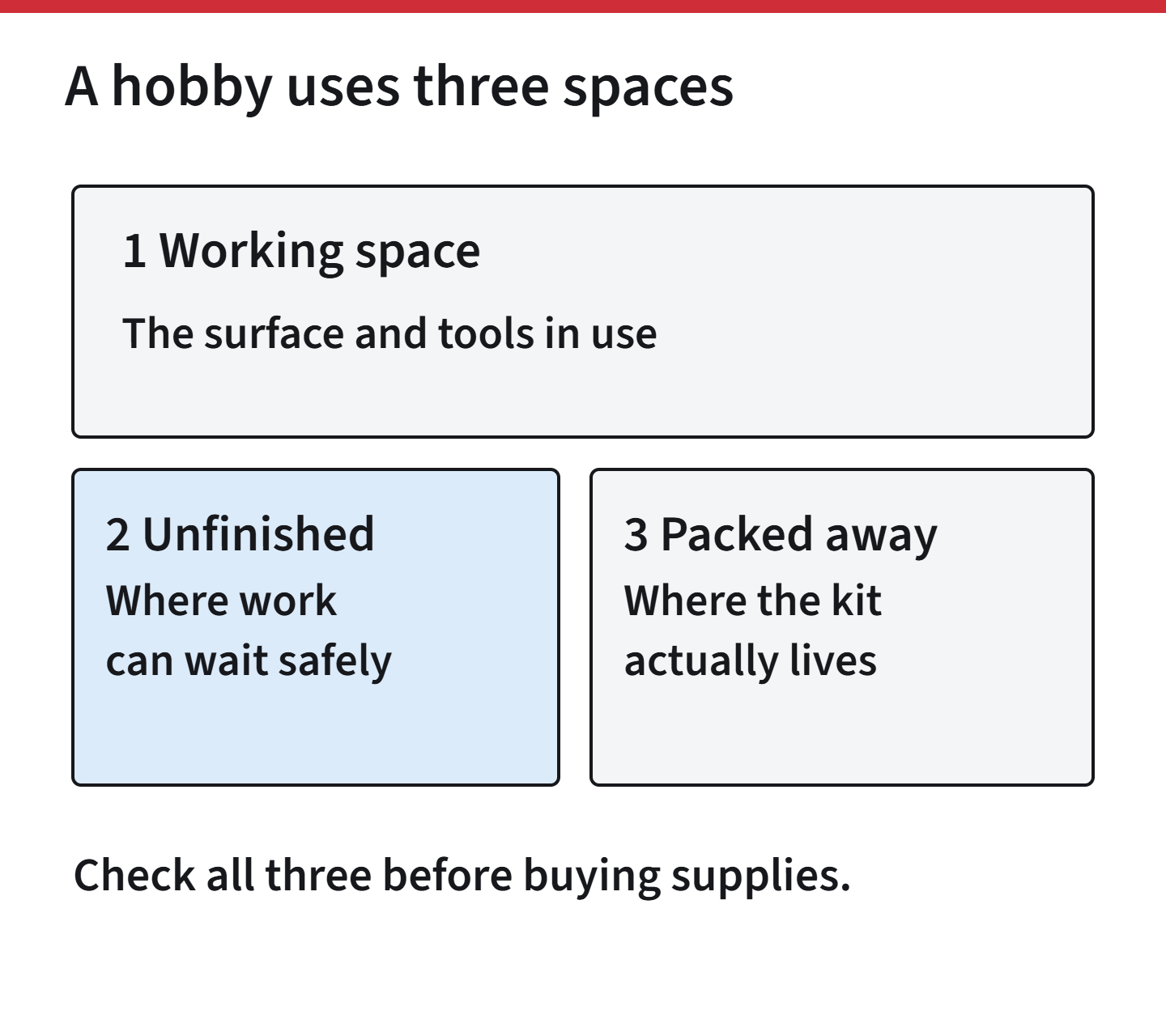
Start with the whole footprint
Think beyond the patch of table in use. Will the project need to stay flat, dry, charge or be stored away from children or pets? Can you stop halfway through without losing the work? A hobby that fits only while the room is unused may be harder to repeat than its materials list suggests.
Three small starts to compare
| First attempt | Already available? | Where it goes afterwards |
|---|---|---|
| One simple paper fold | Suitable paper, if the chosen model permits. | A small dry place for the finished fold. |
| One short piece of writing | A notebook or existing device. | With the notebook or saved writing. |
| Sketch an object at home | Paper and a pencil. | Somewhere the paper can lie safely. |
Paper folding
A sheet of suitable paper can be enough for a first attempt when the chosen instructions require no other materials. The British Origami Society’s Simple Models page links beginner resources including boats, a house and a plane. Choose one set of instructions and check the paper requirements first. Allow time to repeat a fold if you need to.
Writing
A notebook or an existing device keeps the storage demand modest. OpenLearn’s Start writing fiction is a free introductory course listed as 12 hours of study. The provider allows you to start the content without signing up; an account is needed for progress tracking and some activities. Twelve hours is the provider’s estimate for the whole course. Try one small section to begin.
Drawing from an object already at home
Start with paper and a pencil you already have. Choose an object at home and sketch it, then decide what you enjoyed and what you would try differently next time.
The first-attempt card
- Make or do: one small outcome, described in a sentence.
- Already here: the materials and tools you can use safely.
- Spend ceiling: a limit, including any consumables or delivery; zero is a valid starting point.
- Space: working area, storage and the place unfinished work can wait.
- Stopping point: when you will put it away and how.
- Afterwards: what you enjoyed, what was awkward and whether you want a second attempt.
Do not buy the imagined hobby yet
A starter bundle can be poor value if most of it stays in the cupboard. First identify what limited the attempt: unclear instructions, unsuitable materials, an awkward workspace or simply lack of interest. If you decide to buy more, let a limitation from the first attempt guide the next purchase. Enjoying a free activity is a complete outcome.
Plan a first evening you want to repeat
Pick the option you can begin and put away without reorganising your home. Make the first attempt small enough to learn from, then decide whether to repeat it. If company matters more than home storage, use the one-off event or weekly club comparison to examine the practical commitment.
Sources and image credits
Sources and checks
Checked 21 October 2026. British Origami Society: Simple Models; OpenLearn: Start writing fiction. Follow the instructions for your chosen project.
About the images
Illustrative photo: Kelly Sikkema / Unsplash (licence). Original diagram: Rather Good Days.
Read next: Which beginner supplies can wait?.
Research note. A researched guide to choosing a first hobby attempt. The linked resources have not been tried by Rather Good Days. How we make recommendations. Details checked 2026-10-21.